| Restocking Fee | No |
|---|---|
| Return shipping will be paid by | Buyer |
| All returns accepted | Returns Accepted |
| Item must be returned within | 30 Days |
| Refund will be given as | Money back or replacement (buyer's choice) |
| TX Patriots Support Our Troops | NIR compliant with LIFETIME warranty. |
| Country/Region of Manufacture | United States |
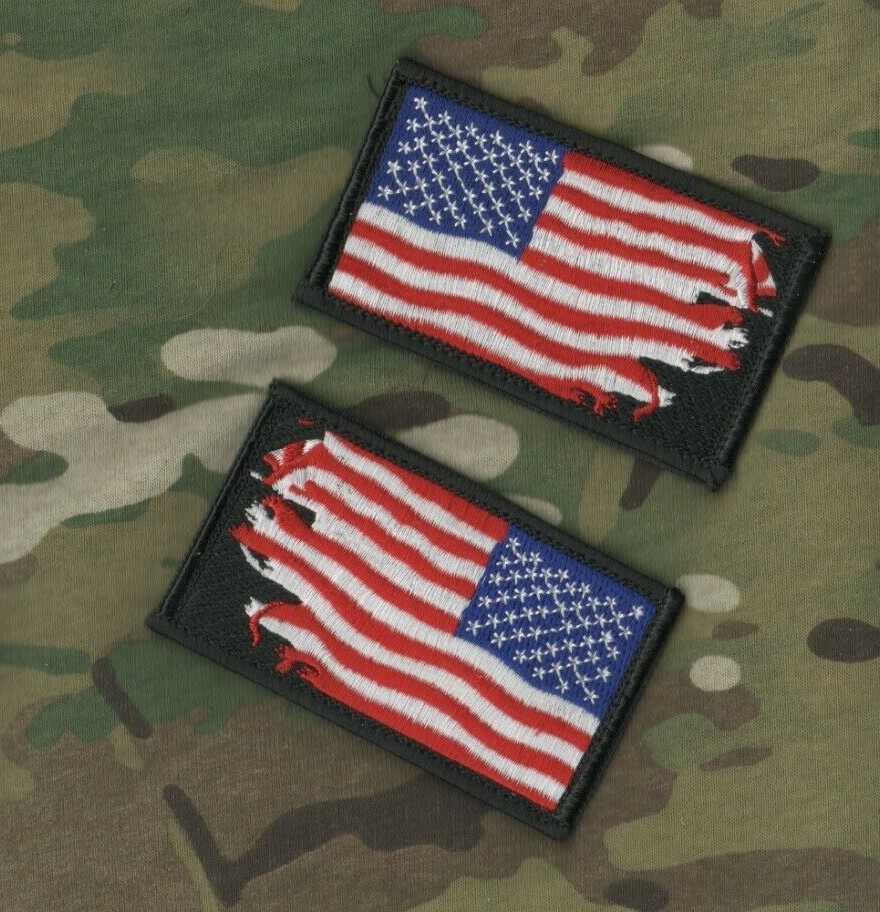
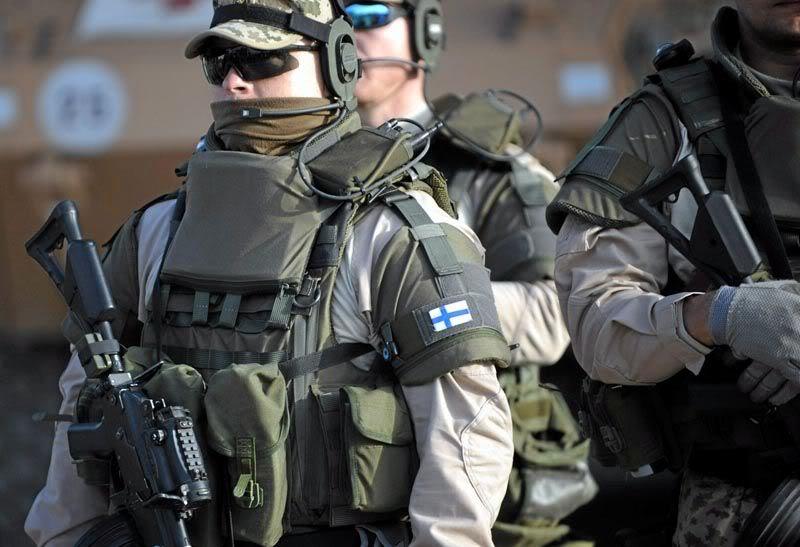
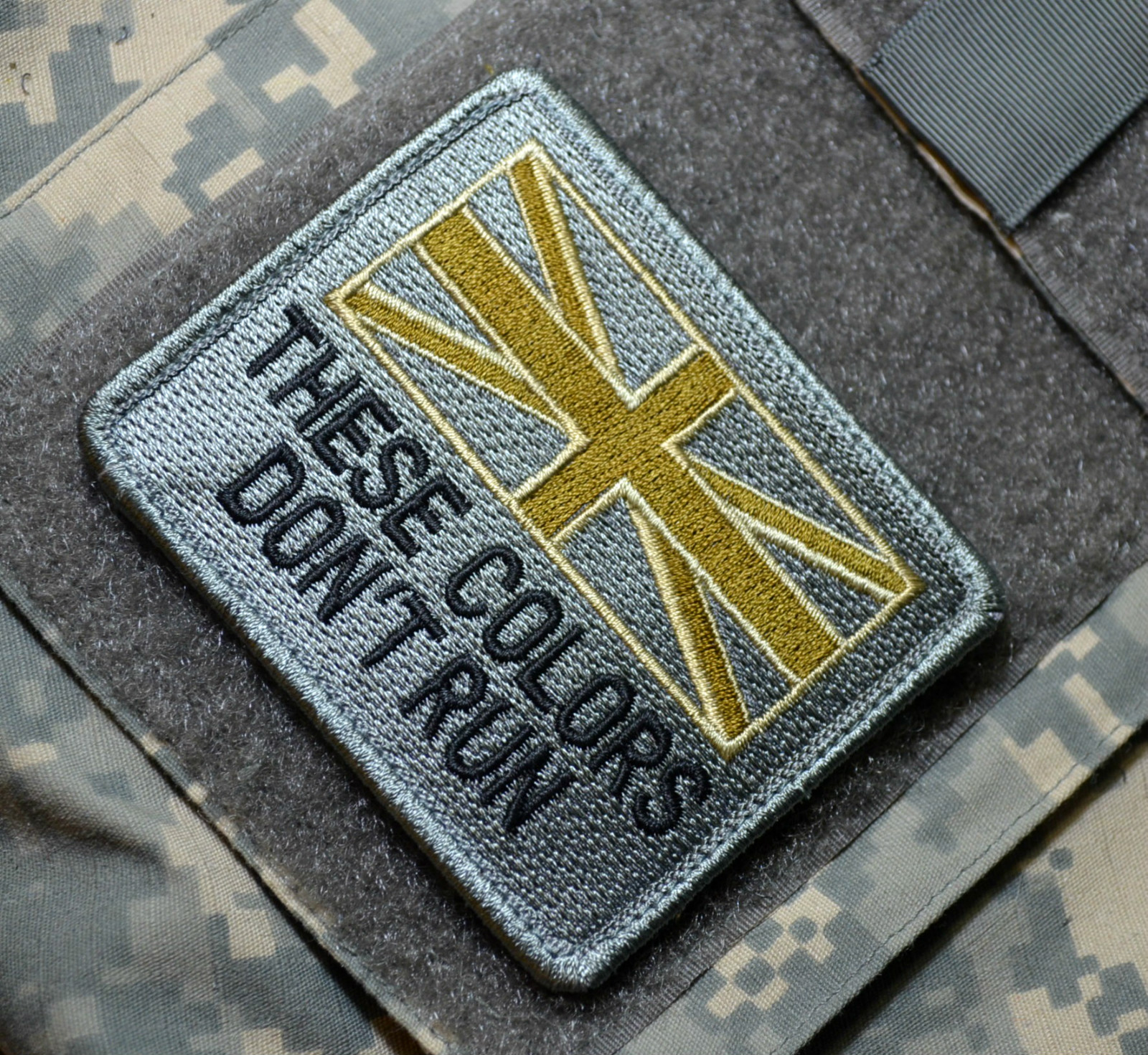
Check the listing for details. NATO ISAF SP OPS SAS burdock-hook BRITISH UK FLAG: These Colors Don't Run. Listed at 12.99 USD. KANDAHAR WHACKER© NATO ISAF SP OPS SAS burdock-hook UK FLAG: These Colors Don't RunThis is an (not cheap import copy) KANDAHAR WHACKER© NATO ISAF COALITION ARMED FORCE FLAG INSIGNIA: These Colors Don't Run SSI. You will receive the item as shown in the first photo. Please note that there are color variations due to settings on different PCs/Monitors. The color shown on your screen may not be the true color. Personal check payment is welcomed.. Felix was originally adopted by 321 EOD company, Royal Army Ordnance Corps (RAOC) in the British Army. It was early in the 1970’s when the unit was formed in Northern Ireland. It seems at that time the story goes that a signaller was sent to the Officer Commanding to ask which radio call-sign the unit wished to use. The OC having lost two operators that morning decided on ‘Phoenix’, to signify rising from the ashes to conquer terrorism in Ireland. However, the young signaller from the British Army misheard the instructions and used the call-sign ‘Felix’ by mistake. SSgt Brian Shepherd who was a bomb disposal expert serving in Northern Ireland at the time then drew what has since become the charity’s unofficial mascot. Northern Ireland: The Ammunition Technicians of the Royal Logistic Corps (formerly RAOC) became highly experienced in bomb disposal, after many years of dealing with bombs planted by the Provisional Irish Republican Army (PIRA) and other groups. The bombs employed by the PIRA ranged from simple pipe bombs to sophisticated victim-triggered devices and infrared switches. The roadside bomb was in use by PIRA from the early 1970s onwards, evolving over time with different types of explosives and triggers. Improvised mortars were also developed by the IRA, usually placed in static vehicles, with self-destruct mechanisms.[10] During the 38-year campaign in Northern Ireland, 23 British ATO bomb disposal specialists were killed in action. A specialist Army unit, 321 EOD Unit (later 321 EOD Company, and now part of 11 Explosive Ordnance Disposal and Search Regiment RLC), was deployed to tackle increased IRA violence and willingness to use bombs against both economic and military targets. The unit's radio call-sign was Felix. Many[who?] believe this to be an allusion to the cat with nine lives and led to the phrase "Fetch Felix" whenever a suspect device was encountered, which later became the title of the 1981 book Fetch Felix. However, the real reason could be either of two possibilities.[citation needed] All units in Northern Ireland had a callsign to be used over the radios. 321 Company, a newly formed unit, didn't have such a callsign, so a young signaller was sent to the OC of 321 Coy. The OC, having lost two technicians that morning, decided on "Phoenix". This was misheard as "Felix" by the signaller and was never changed. The other possible reason is that the callsign for RAOC was "Rickshaw"; however, the 321 EOD felt it needed its own callsign, hence the deliberate choice of "Felix the Cat with nine lives". 321 Coy RAOC (now 321 EOD Sqn RLC) is the most decorated unit (in peacetime) in the British Army with over 200 gallantry awards, notably for acts of great bravery during Operation Banner (1969–2007) in Northern Ireland.[12] British Ammunition Technicians of 11 EOD Regiment RLC were requested by the US Forces commanders to operate in support of the US Marine Corps in clearing the Iraqi oilfields of booby traps and were among the first British service personnel sent into Iraq in 2003 prior to the actual ground invasion. Camp Bastion, a sprawling, well-fortified British-run base in the desert in southern Afghanistan, is the size of the UK town of Reading and home to almost 30,000 people. Bastion - with its own water bottling plant, hospital, police force and even Pizza Hut - is widely regarded as a safe haven for troops. However, a Taliban attack breaching the perimeter and resulting in the death of two US Marines has shown it is not impregnable. Camp Bastion is a Ministry of Defense airbase located northwest of the city of Lashkar Gah in Helmand Province, Afghanistan. The base has barracks for the Afghan National Army. Between 2005 and October 2014 it was the logistics hub for International Security Assistance Force (ISAF) operations in Helmand during the War in Afghanistan and Operation Herrick, it was capable of accommodating over 32,000 people. The camp was built by the British Army and was the largest British overseas military camp built since the Second World War. The base was also home to troops from a number of nations including the United States of America and Tonga. Bastion contains Afghan National Army (ANA) Camp Shorabak, and held Camp Leatherneck until 2014. In November 2006, the then British Prime Minister Tony Blair visited Camp Bastion, and, while addressing a gathering of British troops, described it as an "extraordinary piece of desert ... where the fate of world security in the early 21st century is going to be decided". Camp Bastion, which was the biggest ever British army base, has been left destroyed amid fears the Taliban could soon overrun it. Taliban forces have been moving closer towards the base in recent weeks and are now in control over half of the Helmand province. The army-base-turned-ghost-town was given to the Afghan government forces as a barracks for troops in October 2014. Prior to this, more than 10,000 brave soldiers once called the camp home during the 13 years the British spent fighting the Taliban in the area. Camp Bastion cost £50m to fully build in 2006 and a further £300m to wipe it clean of British assets eight years later. The total cost to British taxpayers of setting up and running the camp was £20billion. The footage filmed by the BBC last week revealed a derelict, empty camp. The deserted camp still features rolls of barbed wire, concrete walls, radar towers and aircraft hangars - all empty and in collapse. The Ministry of Defence said in response to the new footage: "The UK has a long-term commitment to build a more secure, stable and prosperous Afghanistan. "Though our combat mission ended in 2014, the UK continues to support the Government of Afghanistan through NATO’s train, advise and assist mission, Resolute Support. "The UK also provides substantial political, financial and development support." Michael Fallon, the Defence Secretary, said at the time of Camp Bastion's closure two years ago that there was “no guarantee” Afghanistan would be “stable and safe” following the departure of western fighting forces. The former Prime Minister, David Cameron called the drawdown "mission accomplished". But, just weeks after the British left, the Taliban launched a powerful assault on the base. In a shocking indictment of security following the British hand-over, the United States confirmed that they have been forced to use 90 ‘Special Operations’ soldiers to defend the site. They now occupy a tiny corner of Camp Bastion - the rest remains a ghost town. A British security source who visited Helmand even told The Mail on Sunday that the Afghan Army was paying the Taliban thousands of US dollars not to attack them. Intelligence reports have since suggested that the Taliban may be planning to invade Camp Bastion as a symbolic move intended to secure publicity across the world. Colonel Richard Kemp, who led British troops in Afghanistan, said: "Camp Bastion is also a likely objective for the Taliban, if only symbolically, as a demonstration of their capability. Joe Glenton, a former soldier with the Royal Logistic Corps in Afghanistan, said the decision to re-invade Afghanistan had "re-energised the Taliban" and operations from Camp Bastion and similar bases "destabilised the entire region". He told the Independent: "The presence of troops acted as a lighting rod for local resistance. "The decision to re-invade reenergised the Taliban and pulled in non-Taliban local fighters at the costs of thousands of British and Afghan dead and wounded. "We should have left earlier or, better, have never committed thousands of troops into a region we did not understand, with no plan, on behalf of the corrupt Karzai puppet regime." 454 British soldiers lost their lives in Helmand province during the campaign against the Taliban from 2006 to 2014. (By OLI SMITH). You will receive the item as shown in the first photo. Other items in other pictures are available from my eBay Store. They will make a great addition to your SSI Shoulder Sleeve Insignia collection. You find only US Made items here, with the same LIFETIME warranty.**eBay REQUIRES ORDER BE SENT WITH TRACKING, PLEASE SELECT USPS 1ST CLASS SERVICE w/TRACKING** PHOTO CREDIT: UK Times **eBay REQUIRES ORDER BE SENT WITH TRACKING, PLEASE SELECT USPS 1ST CLASS SERVICE w/TRACKING** We'll cover your purchase price plus shipping. FREE 30-day No-Question returnALL US-MADE PATCHES HAVE LIFETIME WARRANTYWe do not compete price with cheap import copies.Watch out for cheap import copies with cut-throat price; We beat cheap copies with Original design, US-Made Quality and customer services.Once a customer, a LIFETIME of services
You may also like